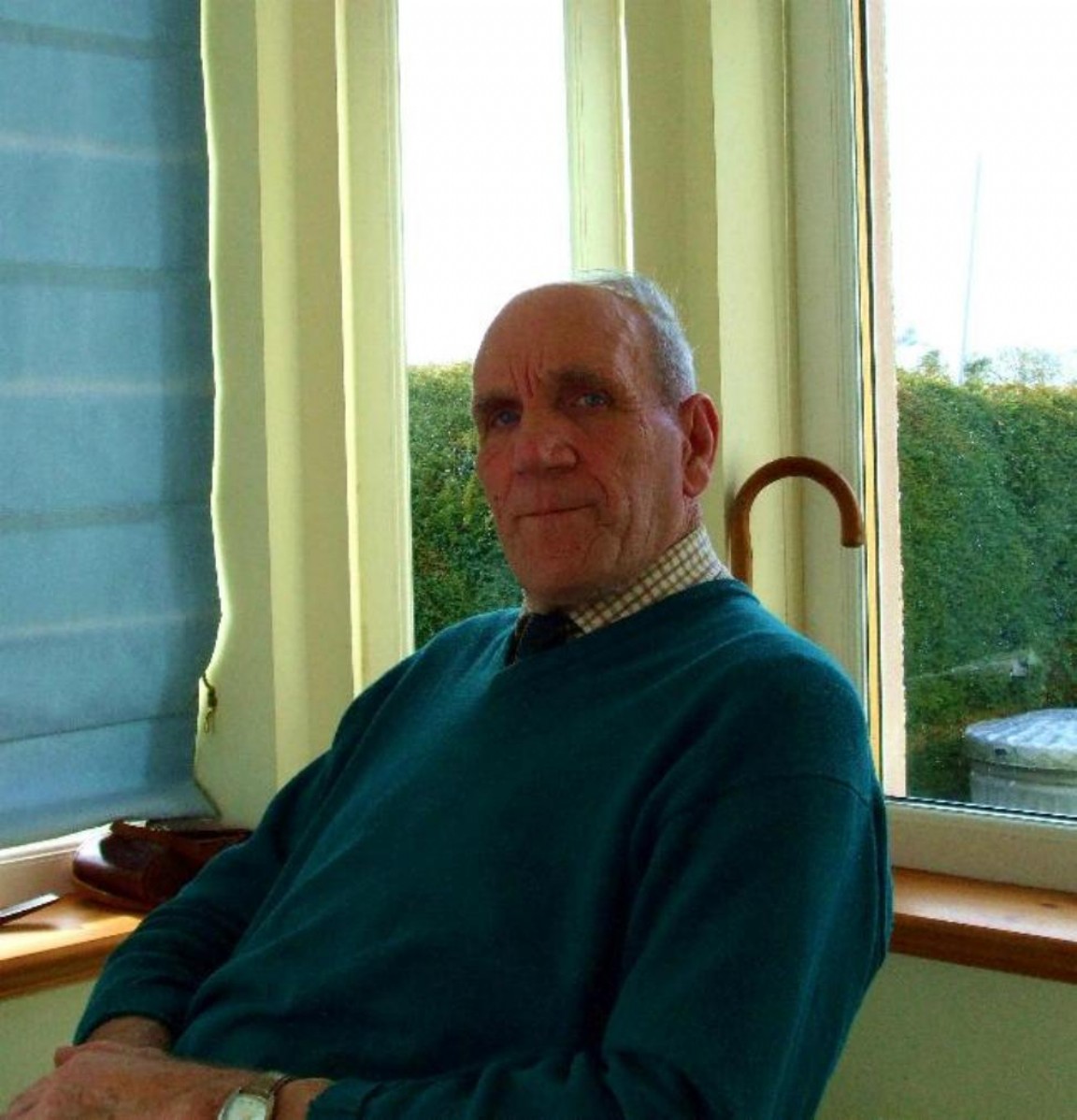
Glentress Forester Training School as recalled by John Keenleyside
As a student at Glentress FTS from 1951-53, I was in the last class which completed training there before it moved to Faskally. The training was conducted in a military manner. The camp had been built pre World War 2, occupied by the army during the war and had become a Forester Training School post war. There was adequate accommodation for around thirty students in first year. Usually huts were divided into cubicles with each student having his own corner, and a common area with wood burning stove. Those who survived first year moved on to huts which had individual rooms with central heating.
I arrived at Peebles station and was met by Tom Robbie, Head of School, who took me to Glentress in an old ex army ambulance. My new case with all my worldly goods was thrown in the back beside dirt and dust that had fallen from the boots of countless previous students. On arrival I was handed over to the catering officer an ex-army Sergeant Major. He took me to a hut and said "Select a corner cubicle, they are best. Help yourself to your furniture from the pile on the floor. You can have a bed, a single wardrobe and a bedside cabinet complete with towel rail".
On the second day, we were divided into working squads of six and sent out to work in the forest with a second year student in charge. Our first task was the brashing of Scots Pine in Shiel Green and our target price was a half penny per tree. This was a tough target so we tended to brash whips and class many rough branched trees as wolves. The instructor soon rumbled to this one and sent us back to brash these rough trees. This sent unit costs through the roof and our practical marks spiralling downwards.
It was a five and half day working week then. Lectures were scheduled for Tuesday and Thursday afternoons and Saturday morning. The working periods were carefully monitored. One student in each squad was appointed ganger for a week. He was responsible for motivating the squad, filling in the time book and calculating unit costs, all of which were carefully scrutinised for accuracy and legibility. No calculators then but a few had the luxury of a slide rule.
Thus things proceeded with exams at end of term, after which a Practical and Personal Assessment (PA) was allocated to each student. The exam marks depended on one's ability to memorise the facts and to write them down in orderly manner. There were no marks for waffle or original thinking. Practical marks depended on physical skill. The ability to wield a large axe or plant huge numbers of trees per day was all important. The P.A. system depended to a large extent on how your face fitted and how you obeyed the rules.
There were additional jobs which had to be performed. Duty squad, cleaning huts, providing firewood, kitchen garden duties, harvesting vegetables for the cookhouse, meteorological station readings, fire ratings, fire duty, fire tower and fire standby with vehicles and pumps ready to go at a moments notice.
When we moved into second year we became "The Seniors" and were treated accordingly but expected to show an example to the new first year students. The work patterns changed and the type of jobs became more technical and included surveying and timber measurement. The marking of thinnings was reckoned to be the skill of a real forester and we were shown how to achieve uniform stands of valuable timber. Little bits of arboriculture were introduced wherever possible. Most trees planted by the F.C. trees were conifers and Prof. Anderson of Edinburgh University encouraged the F.C. to change this by introducing groups of broadleaved trees into the forest. His work started at Glentress.
After the Autumn Term in second year we were all dispatched to other FTSs for what was known as the exchange course, from January until Easter. We returned after Easter for our last term and sat the final exam and the R.S.F.S. Foresters exam. We were then looked on as competent to become foresters and posted to locations throughout the U.K. Some opted for private forestry while others went overseas to some of the developing countries.
How does all this training look when viewed over 50 years later in the 21st century. This training produced foresters with the practical skills which were needed at that time to enable the F.C. to meet the targets imposed on it by government, and to restore the woodlands after the massive war time fellings. Modern machines have taken over the whole harvesting operation and axes and cross cut saws have been consigned to the museums. The need for numerical skills has been taken over by calculator and computer. Surveying with compass and chain has long since gone. The mystery and art of thinning has been replaced by machines which gobble up everything on site and in sight in a short space of time.
In conclusion it shows that the whole picture has changed in the last 50 years. The discipline and training given then were good for the F.C. in the early afforestation phase and created the timber industry as we know it.