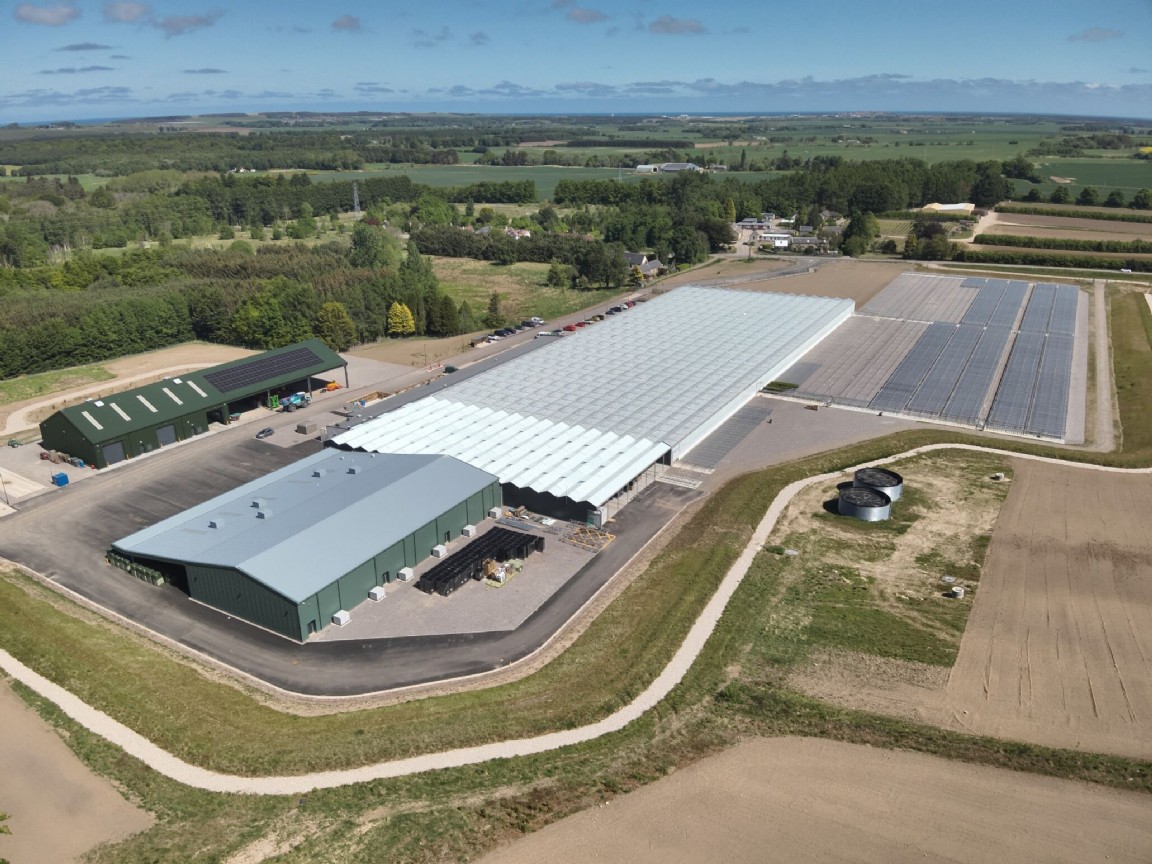
Newton Nursery 2025 - Major upgrade and expansion - and going on towards its century!
Images and details courtesy of the Newton Nursery team.
Newton Nursery originated in 1931 as a local nursery that supplied the local Forestry Commission forests in Morayshire such as Monaughty and Roseisle. Since then the tree plant production has increased massively and the production systems have evolved from almost all manual labour and horse drawn ploughs to a myriad versions of mechanical attachments onto increasingly sophisticated tractor units, plus the use of chemical fertilisers and weed control systems. Aspects of its story are charted in the many entries on this historical website.
The latest major investment enhances and adds to the productive capacity of the nursery and complements the continuing use of the traditional nursery bed and transplant grown trees with which we are all so familiar. Featured in the attached PDF (link below this text) is Alan Duncan who has worked in the nursery and forest since the 1970s and in time rose to the rank of Nursery Manager. The images have been taken as stills from Ben Harrower – Drone Wild video taken on and within the site and also shows part of the external stand area for hardening off the indoors cell grown plants.
Below is a quote from the publicity information published in summer 2025:
“Significant strides are being made at Forestry and Land Scotland’s (FLS) new state-of-the-art Newton Nursery as the site moves towards being fully operational.
Since the handover of the site in February, nearly 12 million seedlings have been germinated and are now growing in the 12,000m2 glasshouse. Eight million of the seeds were planted using the Tape4trees system that involves mechanically planting seeds in special cells joined in a continuous ribbon of tape. This technique then enables up to one million trees to be planted in the outdoor fields in a single day.
Additionally, FLS staff have been sowing four million cell grown stock into mini plugs. Seeds that germinate will then be transplanted by an automated robotic system into larger trays. This process ensures seedlings develop into more viable and hardy trees while also improving efficiency of space in the glasshouse by reducing the quantity of ungerminated seeds sitting in the trays.
The seedlings in the larger cells will stay in the glasshouse until big enough to be placed outdoors to harden off - the process of gradually acclimating them to outdoor conditions - before then going out to the planting teams across Scotland.
A modern borehole fed irrigation system is watering the seedlings inside the glasshouse while outside, ponds that collect rainwater and runoff from roofs and gutters are providing the water for the outdoor trees. The boreholes mean there will be no new demand on the mains water system.
Energy and resource efficiency has been core to the redevelopment: local Scottish timber has been used in construction of the office building, low energy use technologies have been incorporated into the building design, while solar panels are supplementing electricity use.
The FLS nursery team, along with support from companies involved in the construction of the new tree nursery facility including Morgan Sindall, Oberlanders Architects, AtkinsRealis and Currie & Brown Limited, have also carried out landscaping work at the new site.
Bryony Hewetson Ward, FLS’ Head of Plant and Seed Supply, said:
“It’s exciting to see the progress being made at our new nursery site since the construction completion and handover of the glasshouse.
“The modernisation of Newton Nursery will help FLS improve operational efficiency and flexibility. We are already seeing how innovation and harnessing the benefits of cutting-edge technology such as mechanised tree planting and other process improvements is allowing us to plant more trees.
“Growing trees from seed inside the glasshouse instead of outdoors in fields is allowing us to have much better control over the growing environment making seedlings less vulnerable to damage from extreme weather events, herbivore browsing and competition from weeds.
“We are also starting to see the positive impact of making energy and resource efficiency core to the redevelopment. The borehole water supply and ponds used to irrigate our young trees are proving valuable during the recent dry spell.”
Now that the redevelopment is complete, Newton could have up to 25 million trees, including both conifer and broadleaved species, growing on site in any one year, a significant increase from the seven million trees FLS were able to produce previously – representing significant operational savings.
Planting and growing more young trees in Scotland will underpin FLS’ contribution to the Scottish Government’s ambitious target of net zero emissions by 2045. It will reduce the carbon footprint created from transport emissions and increase the number of trees we plant to absorb carbon dioxide, produce oxygen and end up as sustainable wood products”.
Download Large Version (709kB)
Groups: Forest Nurseries