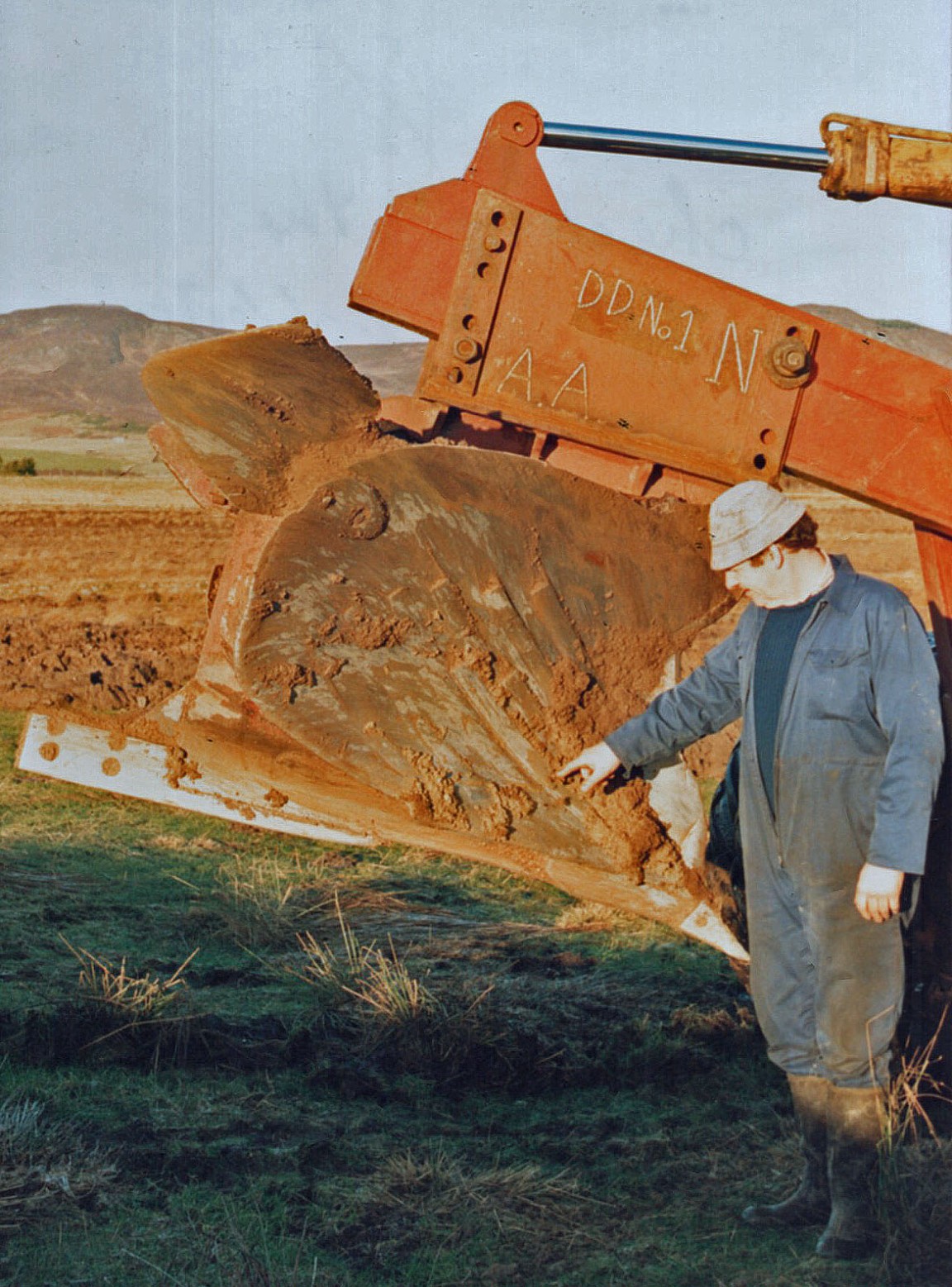
Ploughing near Edderton
The photos are courtesy of Geordie Davidson via Tom McLellan, Taynuilt.
Geordie standing beside the double throw plough head used at Edderton. Uncertain what is being pointed out but the marks on the mouldboard seem to indicate that wear strips had been welded onto the mouldboard to take the brunt of the grinding effects of the gravel and sand when ploughing. Note the extended heel on the central plate possibly to assist with keeping the plough head on an even keel.
The letters and numbers on the plough mounting flanges?
DD No 1 - Double Drainer No 1 or what?
N - ?
AA – Andrew Allan?
The soil is certainly very red looking and could be a mix of gravel, sand and clay by the way it is sticking to the mouldboard.
A top view of the plough frame and head ram is shown in the attached PDF and the excellent potential tree plant spacing across the platform between the furrows and also across the furrow as well.
Any comments are very welcome.
Download Large Version (1.1MB)
Groups: Forestry Areas, Forestry in Action, Tractors Ploughs and Drainage Machines
The N stands for Narrow and the narrowness of the plough ridge can be seen in the top view looking back along the plough furrow. Apparently the trees were planted on the outside edge of the plough ridge.
AA stands for Andrew Allan and was welded onto all of the firms hardware.
The straps welded onto the mouldboard (feathers) are made of very hard steel that very often came from second hand lorry springs and were designed to reduce the wear and tear to the mouldboard.
The extended heel on the on the central plate ( Geordie calls this a 'landslide' ) was to keep the plough stable in the ground and it was made from the cutting edge of second hand bulldozer blades ( four bolt holes can be seen ).
Andrew Allan was very focused on ensuring that his equipment was strong. Comment left on 06 October 2020 at 20:44 by Tom McLellan