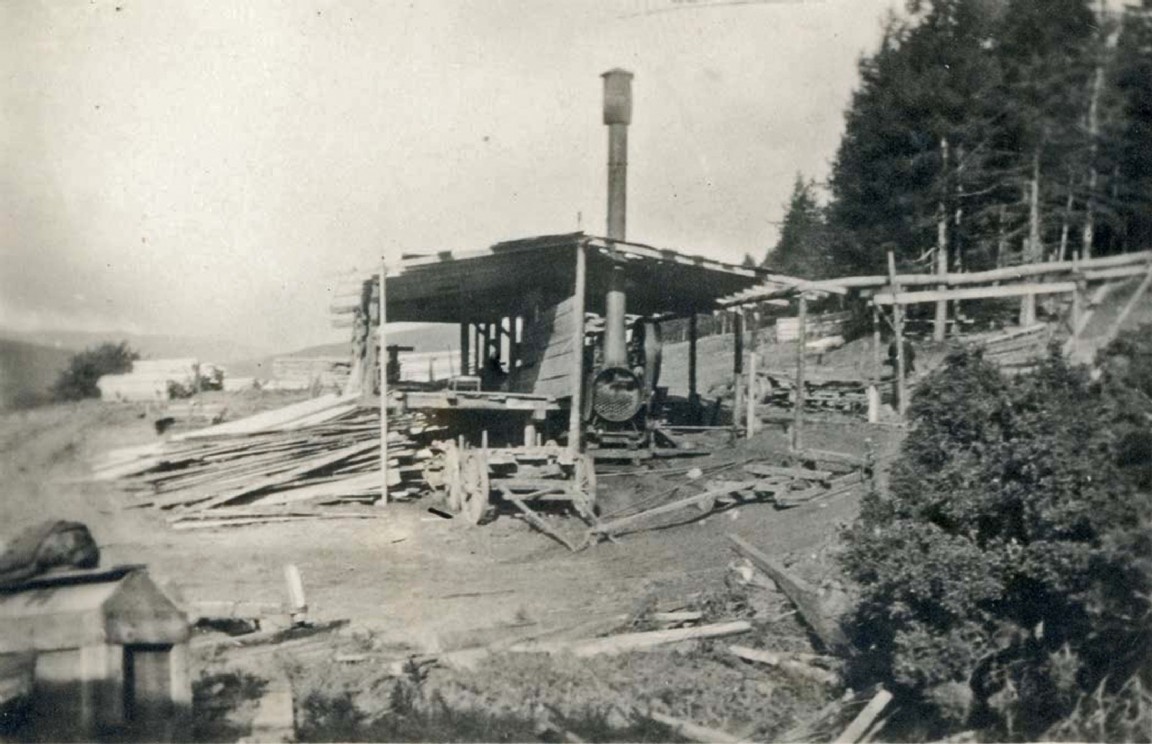
New England Sawmillers in Scotland – Unit No 3 sawmill and equipment
New England Sawmillers in Scotland – Unit No 3 sawmill and equipment
The Images are courtesy of https://www.actonhistoricalsociety.org/ww1-sawmill-unit.html Also check out Records No 4778 – 4789 or under ‘Groups’ the ‘American sawmillers in Scotland 1917’.
End on view of sawmill shelter construction with steam engine on the right and parts of the saw bench just visible behind. Note that the fire box end has been opened and swung back for maintenance or cleaning. The top of the chimney will most likely have a spark arresting system that may well be essential in their drier climate forest areas back in New England.
Note the single horse wagon in front of the board walk where all the boards from the mill are carried and dropped on. Once loaded the wagon would take them down to the ‘stick yard’ where they would be all stacked with timber spacing stickers to aid drying. The waste ‘backs’ or the first cut off the log with much of the bark has been thrown on a pile on the left. Useful for firewood and creating rough shelters.
Lying in front of the steam engine is one of the horse drawn sledges for taking timber out from the forest. The sledge appears to be designed to be pulled by a pair of horses most likely with a pair of chains each to a swingle tree on each side of the sledge. The pole will be hitched up between the two horses and act as a brake on steep down slopes. The sledges also had the benefit of keeping the logs clear of the ground and thus free of grit, sand and stones which otherwise have been damaging to the saw blades.
Logs cut to length in the wood and carried by the sledge would have been dropped off on the far right on the far side of the man. From there they would be sorted and rolled by hand down the hill to the saw bench.
The stacks of timber in the back ground at this high level may have been from the initial very early sawmilling cuts and seen here drying a bit before being used to build the cook and bunk houses for the men.
Any details and comments very welcome.
Download Large Version (415kB)
Groups: American sawmillers in Scotland 1917, Buildings in Forests, Forestry Areas, Sawmills, pulp mills, chipboard mills